I. The Division of the Church After 1949: The Birth of the House Church
In 1949, the Chinese Communist Party (CCP) took control of mainland China and established the People’s Republic of China (PRC). Soon afterward, prominent Christian leader Y. T. Wu (Wu Yaozong) wrote and published The Christian Manifesto, publicly supporting the CCP’s policy of bringing the churches under state supervision in the name of national unity and progress, and calling on Protestant Christians throughout China to follow this direction.
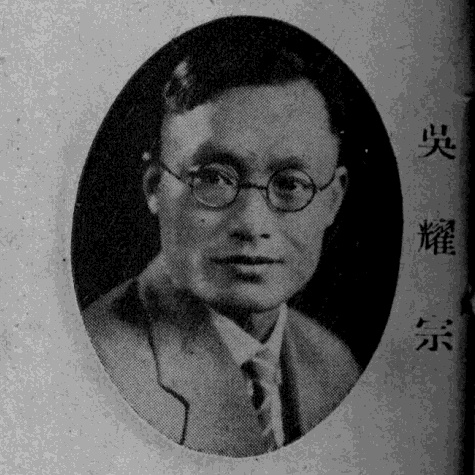
Y. T. Wu (Wu Yaozong) published The Christian Manifesto and promoted the establishment of the Three-Self Patriotic Movement.
During the 1950s, Wu successfully helped secure the signatures of approximately half of China’s Protestant Christians for The Christian Manifesto. He also played a leading role in establishing and directing the Three-Self Patriotic Movement (TSPM), which became the government-recognized organization overseeing Protestant Christianity in China.
However, China’s independent churches, represented prominently by Wang Mingdao, strongly resisted the Three-Self Patriotic Movement, both because of its allegiance to a political authority and because of what they regarded as its liberal theological orientation. Because they refused to join the Three-Self Church, an entire generation of Chinese independent pastors faced severe persecution, and many of their churches were forced to close.

``` Wang Mingdao ```
Wang Mingdao (1900–1991), a prominent figure in China’s house church movement, insisted on the independence of the church from state control. Because he refused to join the Three-Self Patriotic Movement, he endured many years of imprisonment.
These resisting congregations often began meeting secretly in private homes, fields, and other concealed locations. Such gatherings eventually became widely known as “house churches.”
Despite the Three-Self Patriotic Movement’s efforts to maintain a cooperative relationship with the CCP, it too was eventually dissolved and subjected to persecution during the Cultural Revolution (1966–1976). During this period, virtually all forms of Christian practice in China were suppressed, forcing Christian communities underground.
From the 1950s through the 1970s, extensive networks of house churches developed particularly in rural areas of China. These underground Christian communities would later become an important foundation for the rapid growth and revival of China’s house church movement.
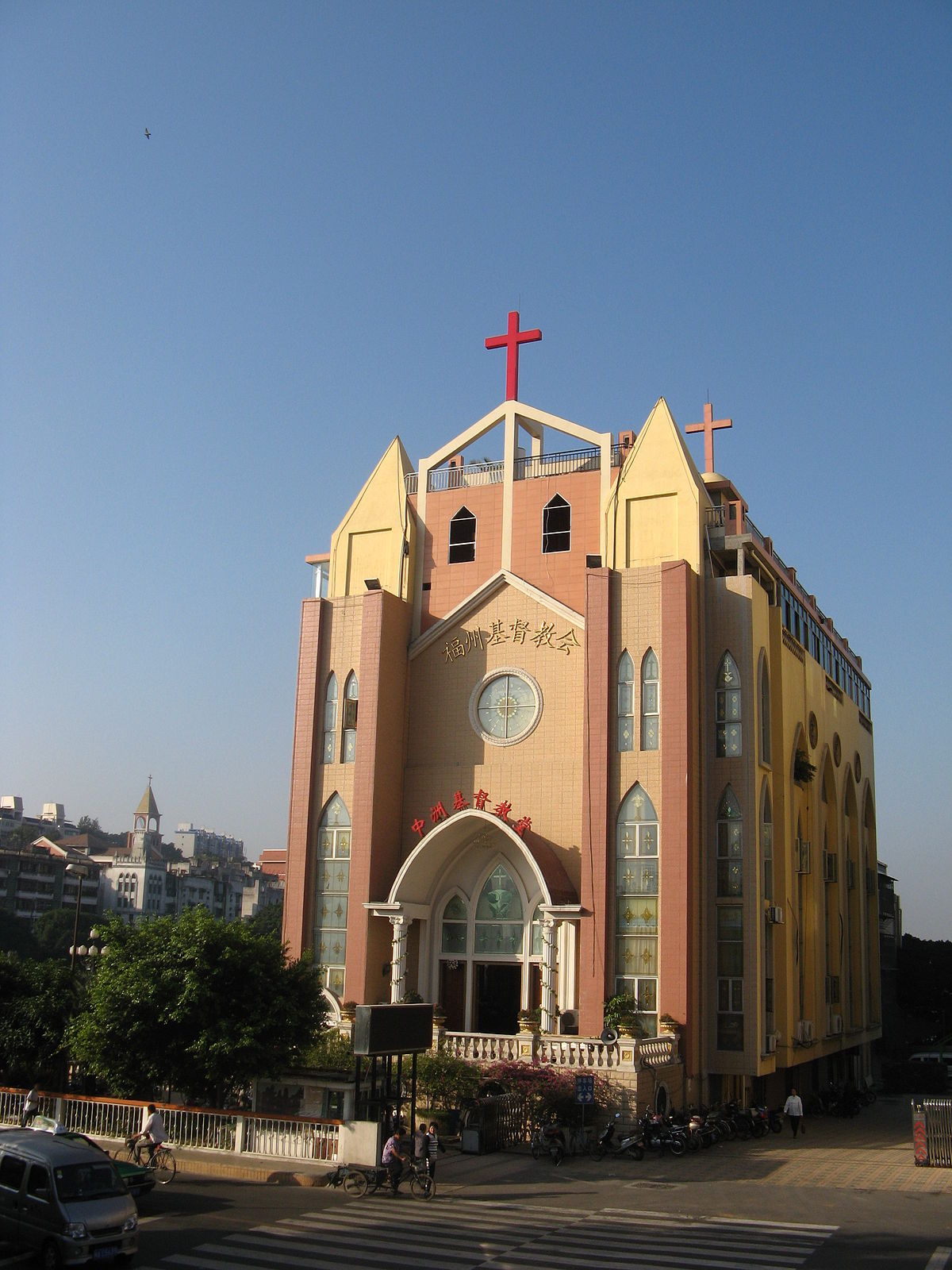
The official Three-Self Patriotic Church in China (“Three-Self Church”). The Three-Self Patriotic Movement is the government-recognized organization overseeing Protestant churches in China.
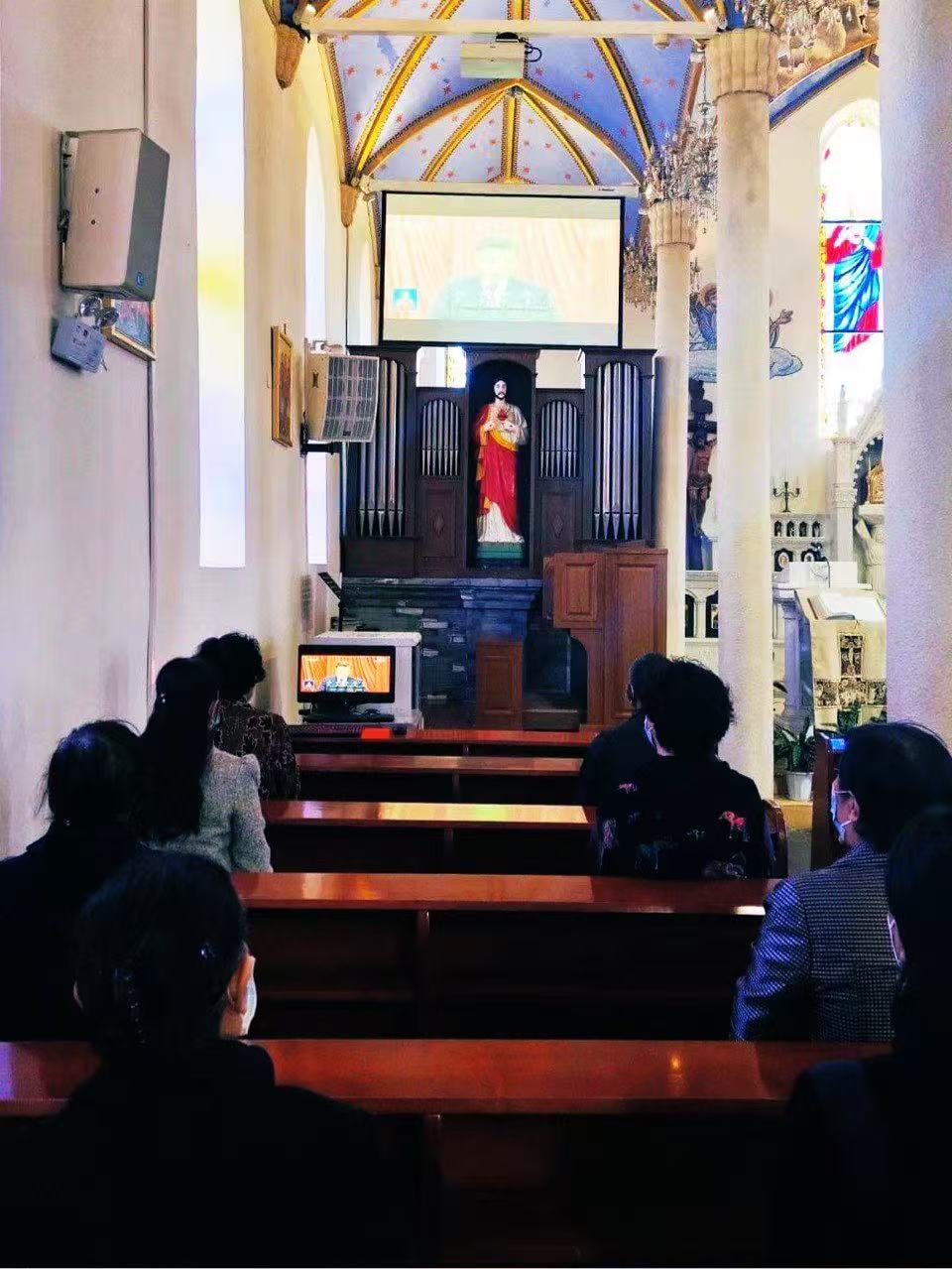
Because they refused to join the Three-Self Church, an entire generation of Chinese independent pastors faced severe persecution. Churches were closed, and Christian gatherings were prohibited. Many believers were forced to meet secretly in private homes, rural courtyards, forests, fields, and other secluded locations. These congregations gradually became known as “house churches.”
Although the Three-Self Patriotic Movement sought to maintain a cooperative relationship with the government, it too was dissolved and severely disrupted during the Cultural Revolution (1966–1976). Nearly all public Christian activities across China ceased, forcing the church almost entirely underground.
It was during the 1950s through the 1970s that extensive networks of house churches gradually emerged across China’s vast rural regions. These networks later became an important foundation for the revival and growth of Christianity in China.
II. What Is a House Church?
A house church refers to a Protestant Christian church in China that has not joined or registered with the government-sanctioned Three-Self Patriotic Movement (TSPM).
Because these churches are not officially registered, they lack formal legal recognition. As a result, they generally cannot legally own church property as recognized religious venues and lack legal protection for openly holding religious gatherings.
House churches have therefore long faced various forms of pressure and restrictions, including:
- Suppression or prohibition of church gatherings;
- Seizure of church property;
- Closure of meeting places;
- Travel restrictions imposed on church leaders;
- Restrictions on public preaching;
- Detention, administrative penalties, and, in some cases, criminal prosecution of pastors, elders, and ordinary believers.
In response to such pressure, different house churches have adopted different approaches. Some pastors openly criticize government restrictions on religious freedom. Many other churches seek to maintain a low profile, focusing primarily on worship, prayer, pastoral ministry, and evangelism while attempting to avoid direct confrontation with the authorities whenever possible.
Despite these different approaches, they share a fundamental conviction:
The Church belongs to Christ, not to the state.
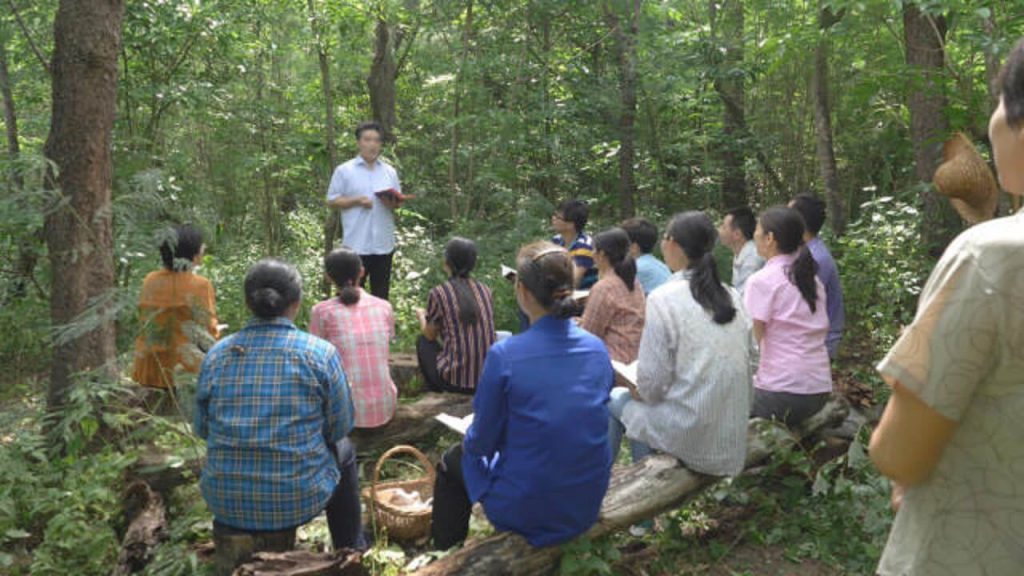
Chinese house church believers holding an outdoor gathering in a rural area
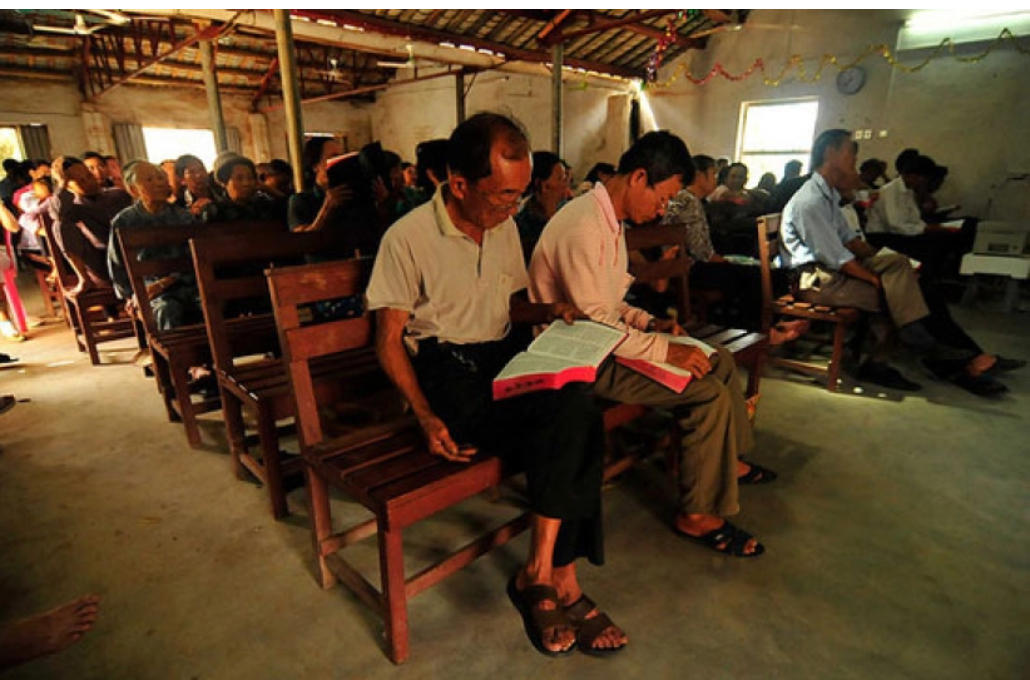
Chinese house church believers gathering together to study the Bible.
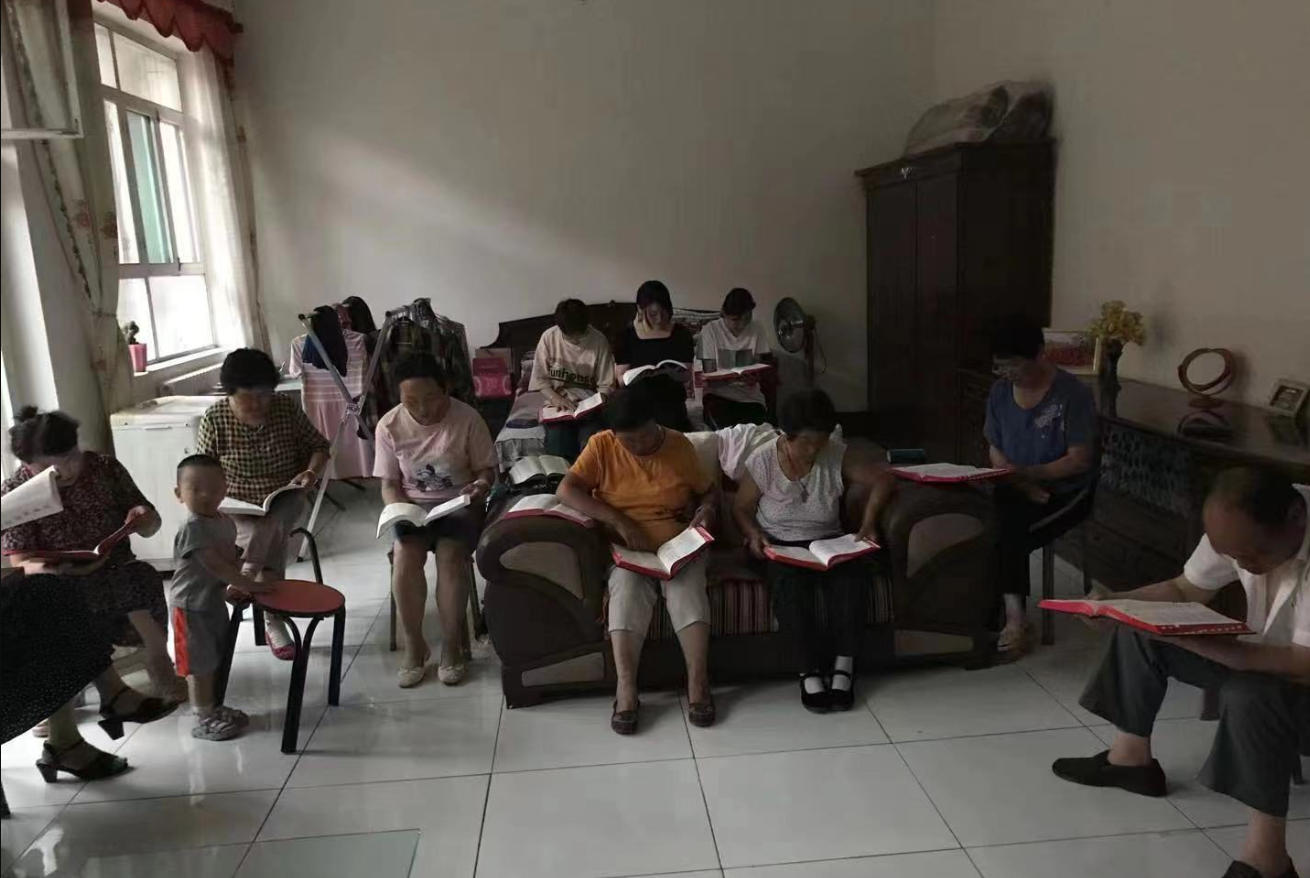
Chinese house church believers studying the Bible together in a private home.
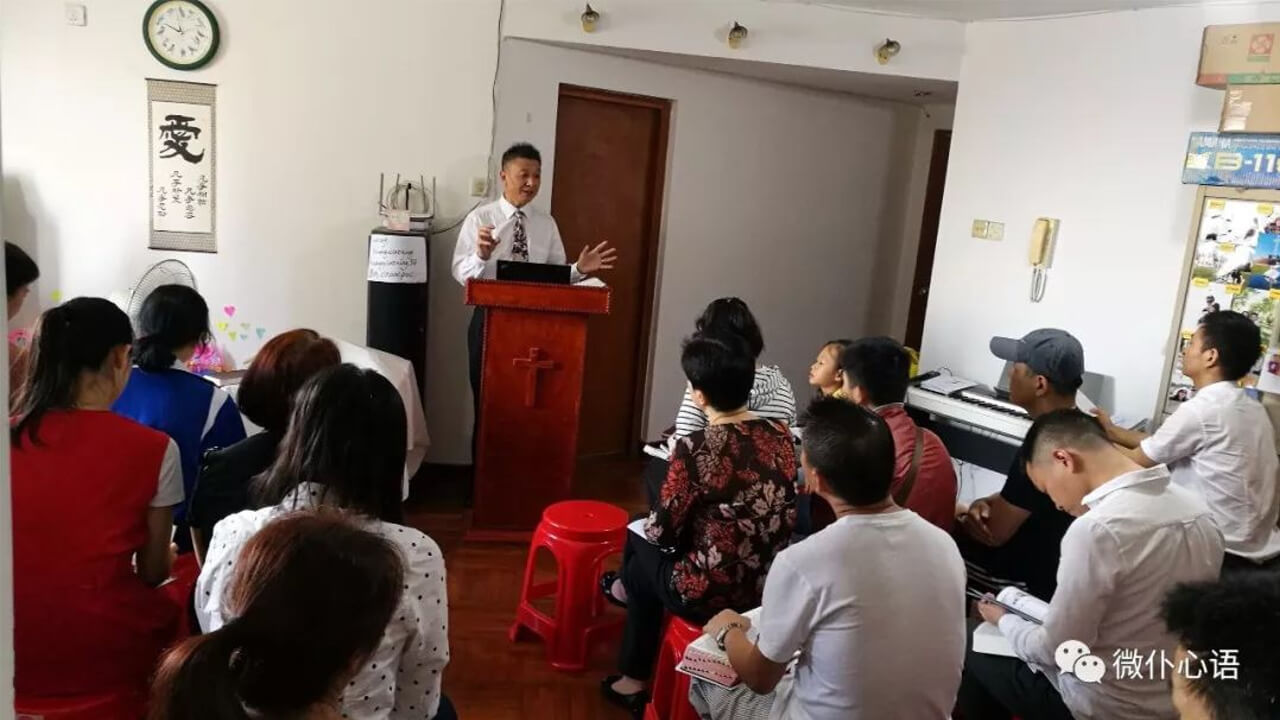
A Chinese house church pastor preaching.
III. The Spiritual Tradition of China’s House Churches
Most house churches do not define their identity in terms of political resistance. Rather, they see themselves as part of a spiritual tradition that has developed independently within the Chinese church for more than a century.
This tradition can be traced back to the great revival movements that swept through rural China in the early twentieth century. During this period, many indigenous churches—founded and led by Chinese Christians and independent of foreign missionary control—began to emerge. Their theological backgrounds included both fundamentalist and charismatic traditions.
As early as the 1920s, these independent churches repeatedly faced persecution. Many believers endured imprisonment, torture, and even martyrdom.
Yet they remained committed to the calling to “take up the cross and follow Christ,” believing that true strength comes from union with Christ rather than dependence on political protection.
For this reason, although contemporary house churches represent a wide range of theological traditions—including charismatic, fundamentalist, Reformed, Baptist, Presbyterian, and numerous non-denominational churches—they broadly inherit the independent tradition of China’s indigenous churches and share a commitment to wholehearted devotion to Christ.
As many Chinese house church believers have sung:
“At five in the afternoon across China, the sound of prayer rises; the Lord’s grace comes down from heaven—how could prison walls ever stand in its way?”
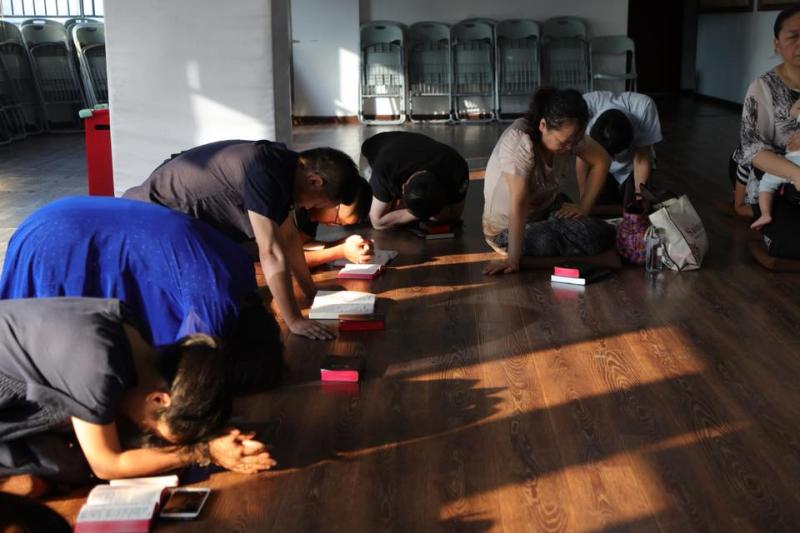
Chinese house church believers bowing together in prayer, seeking God’s guidance.
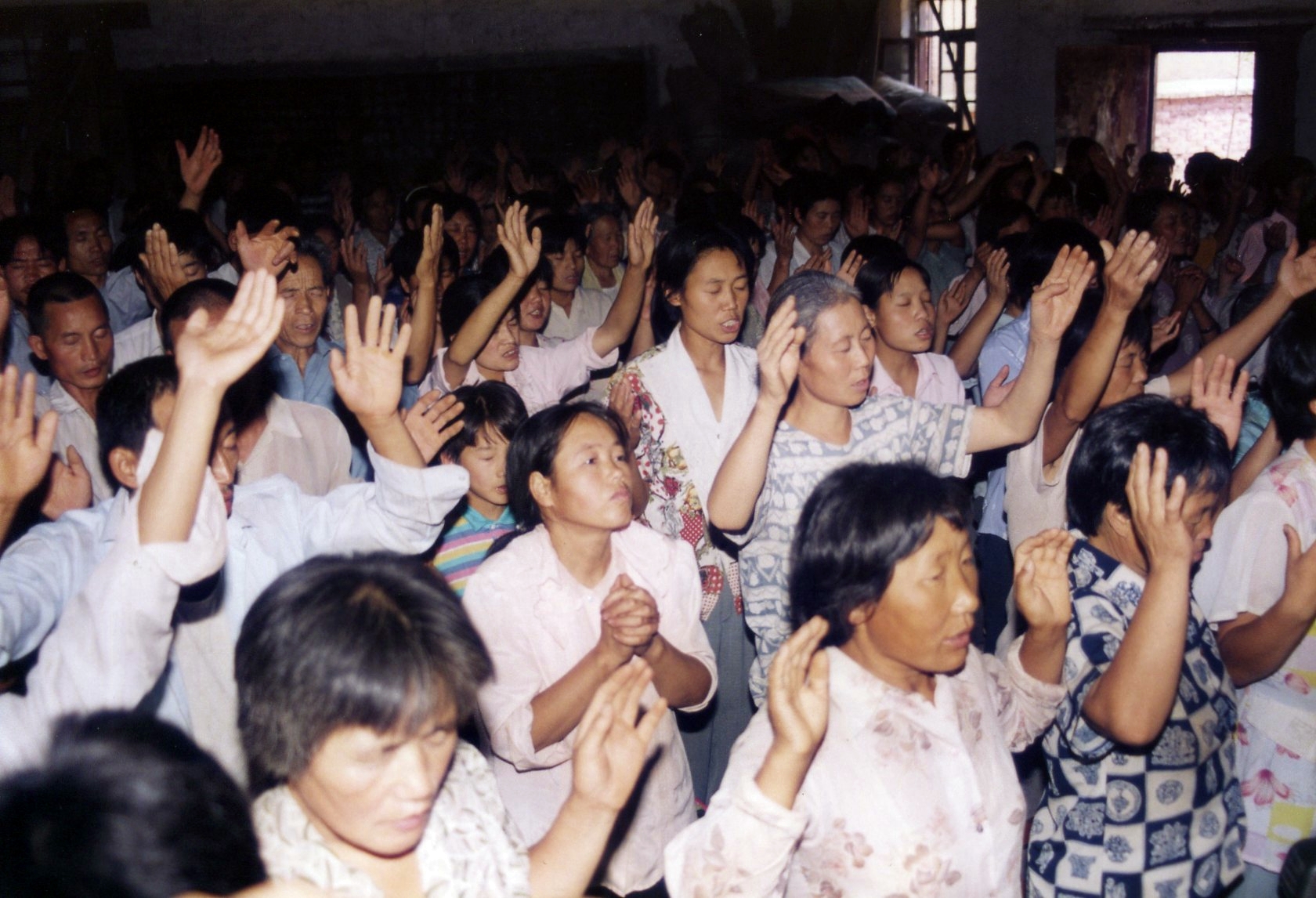
Chinese house church believers worshiping and praising God together during a gathering.
IV. Revival After Reform and Opening Up (1980–2010)
Following the beginning of China’s Reform and Opening Up in 1978, the country introduced market-oriented economic reforms, while restrictions on religious activities were also significantly relaxed.
The restored Three-Self churches developed rapidly, and many church buildings reopened.
At the same time, house churches that had long existed throughout rural China began to experience a visible revival and expanded rapidly across the country.
Beginning in the 1990s, as China’s urbanization accelerated, increasing numbers of intellectuals, university students, and professionals encountered the Christian gospel.
During this period, many Chinese Christians who had studied, worked, or taught overseas, along with foreign teachers, scholars, and individuals with missionary backgrounds who were permitted to enter China—particularly those from North America and South Korea—actively shared the gospel in Chinese cities. Their efforts contributed to the emergence and growth of a new generation of urban house churches.
As a result, new house churches began to emerge in major cities such as Beijing, Shanghai, Guangzhou, Chengdu, Shenzhen, Hangzhou, and Xi’an.
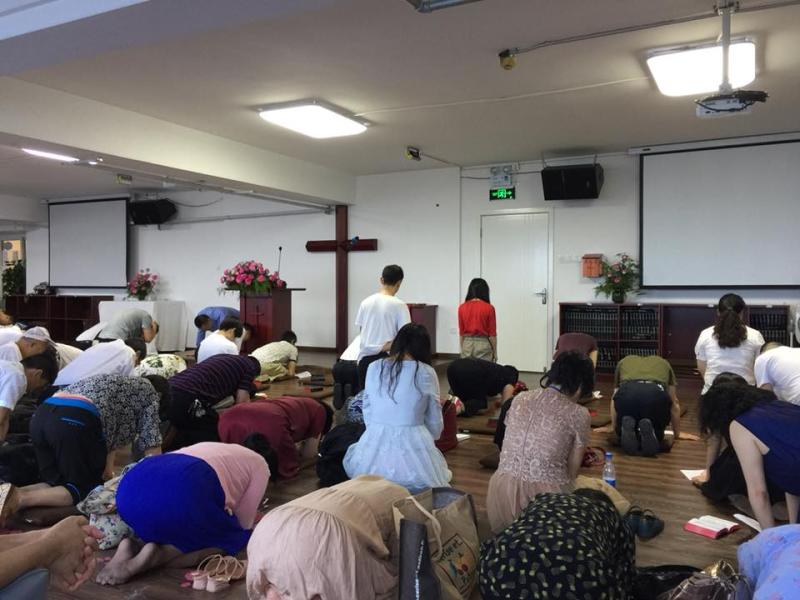
Emerging urban house churches have attracted many young people and intellectuals, becoming an important part of the development of the contemporary Chinese church.
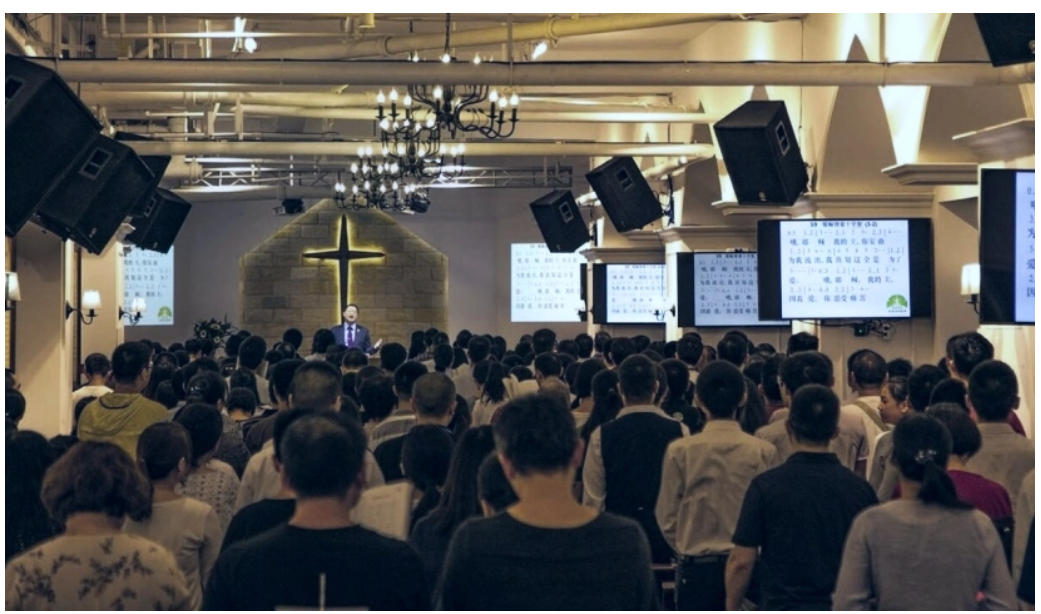
Since the beginning of Reform and Opening Up, urban house churches have grown rapidly, with believers gathering together in prayer and worship of God.
Most of these urban house churches met in rented office buildings, apartments, or other commercial spaces. Although they were not formally registered, many gathered openly and actively engaged in discipleship training, church planting, and theological education.
A number of churches also began establishing unregistered seminaries and theological training programs to equip indigenous Chinese pastors and church leaders.
By the 2010s, the total number of Protestant Christians in China—including believers affiliated with both the Three-Self churches and house churches—was widely estimated to have reached between 80 million and 100 million.
V. Comprehensive Tightening of Religious Control Since 2018
In the new era, the Chinese government once again strengthened its comprehensive control over religious affairs.
In fact, signs of this shift had already emerged during the large-scale cross-removal campaign in Zhejiang Province in 2014, when crosses were removed from numerous church buildings. Many researchers and church leaders regard this campaign as marking the beginning of a new “harsh winter” for China’s house churches.

A church building being demolished, reflecting the forced demolition faced by some religious sites.

An excavator demolishes a church building. In recent years, churches and religious meeting places in some areas have been demolished for reasons related to administrative enforcement, urban development, or religious policies, drawing widespread attention.
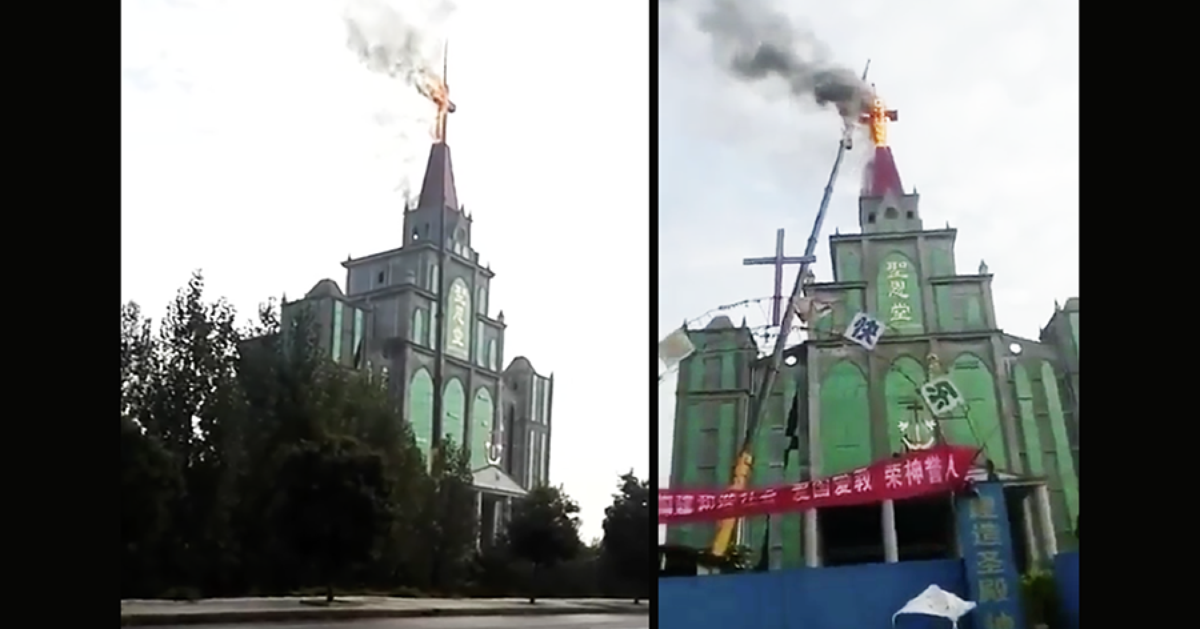
A before-and-after comparison showing the removal of a cross from a church. Cross-removal campaigns in some regions of China have drawn widespread attention both domestically and internationally.
At the same time, the “Sinicization of religion” began to emerge as an important direction of official religious policy in China.
In 2016, the National Conference on Religious Work formally called for “upholding the direction of the Sinicization of religions in China.” In 2017, the 19th National Congress of the Chinese Communist Party again emphasized this policy.
In February 2018, the revised Regulations on Religious Affairs officially came into effect. In March of the same year, China’s national Protestant organizations issued the Five-Year Work Plan for Advancing the Sinicization of Christianity in China (2018–2022).
Many Christians viewed these developments as signaling a shift in China’s religious policy—from primarily restricting the development of religion toward a more proactive effort to reshape religious communities in accordance with official requirements.
Fenggang Yang, Professor of Sociology at Purdue University, has described the policy in these terms:
“The primary purpose of the Sinicization of religion is not cultural assimilation, but political domestication.”
VI. The New Regulations on Religious Affairs and the Changing Situation of House Churches
Some studies have noted that, for more than three decades following China’s Reform and Opening Up, the country’s religious policy was largely guided by the CCP Central Committee’s Document No. 19 of 1982 and Document No. 6 of 1991.
Although the 1982 Document No. 19 expressed disapproval of Christian gatherings in private homes, it also cautioned authorities against suppressing them by coercive means, leaving local governments a certain degree of flexibility in implementation.
The 1991 Document No. 6 called for the administration of religious affairs in accordance with law, while continuing to emphasize that normal religious activities should not be interfered with.
As a result, house churches existed for many years in a kind of “gray zone.”
However, the revised Regulations on Religious Affairs, adopted in 2017 and formally implemented in 2018, significantly strengthened state oversight of religious activities, places of worship, religious personnel, and religious finances.
Christian lawyer Fang Xiangui, who was detained for 107 days in connection with church-related cases in Zhejiang, argues that the new regulations effectively established more comprehensive state supervision over religious affairs, making it increasingly difficult for churches without government recognition to operate legally.
As he observed:
“A new method of persecuting the church in the new era is the weaponization of regulations.”
Policy areas that had previously remained ambiguous were increasingly transformed into detailed regulatory provisions, providing more explicit legal grounds for penalties and enforcement.
According to Fang’s observations, measures against house churches have also increasingly shifted from administrative sanctions and fines toward criminal prosecution. Charges used in such cases have included fraud, illegal business operations, organizing or using a “cult” organization, illegally crossing national borders, and inciting subversion of state power.
---
VII. Major Church Cases and Continuing Persecution
In recent years, a number of prominent cases involving house churches have drawn international attention.
Jin Tianming of Beijing Shouwang Church has faced prolonged surveillance and restrictions. Beijing Zion Church was shut down in 2018, while Chengdu Early Rain Covenant Church was subjected to a major crackdown later that same year.
Pastor Wang Yi of Early Rain Covenant Church was sentenced to nine years in prison after being convicted of “inciting subversion of state power” and “illegal business operations,” making his sentence one of the longest imposed on a prominent Chinese house church pastor in recent decades.
Other cases—including those involving Wang Honglan in Inner Mongolia, Xu Feng in Harbin, and the Covenant Home Church in Linfen, Shanxi—have also been cited as examples of the increasing use of criminal prosecution against house churches in recent years.
At the same time, government-administered religious venues have increasingly been required to display the Chinese national flag and political slogans emphasizing themes such as “love the Party, love the country, and love religion.”
In response, some house church pastors maintain that worship belongs to God alone and that political loyalty should never be placed above faithfulness to God.
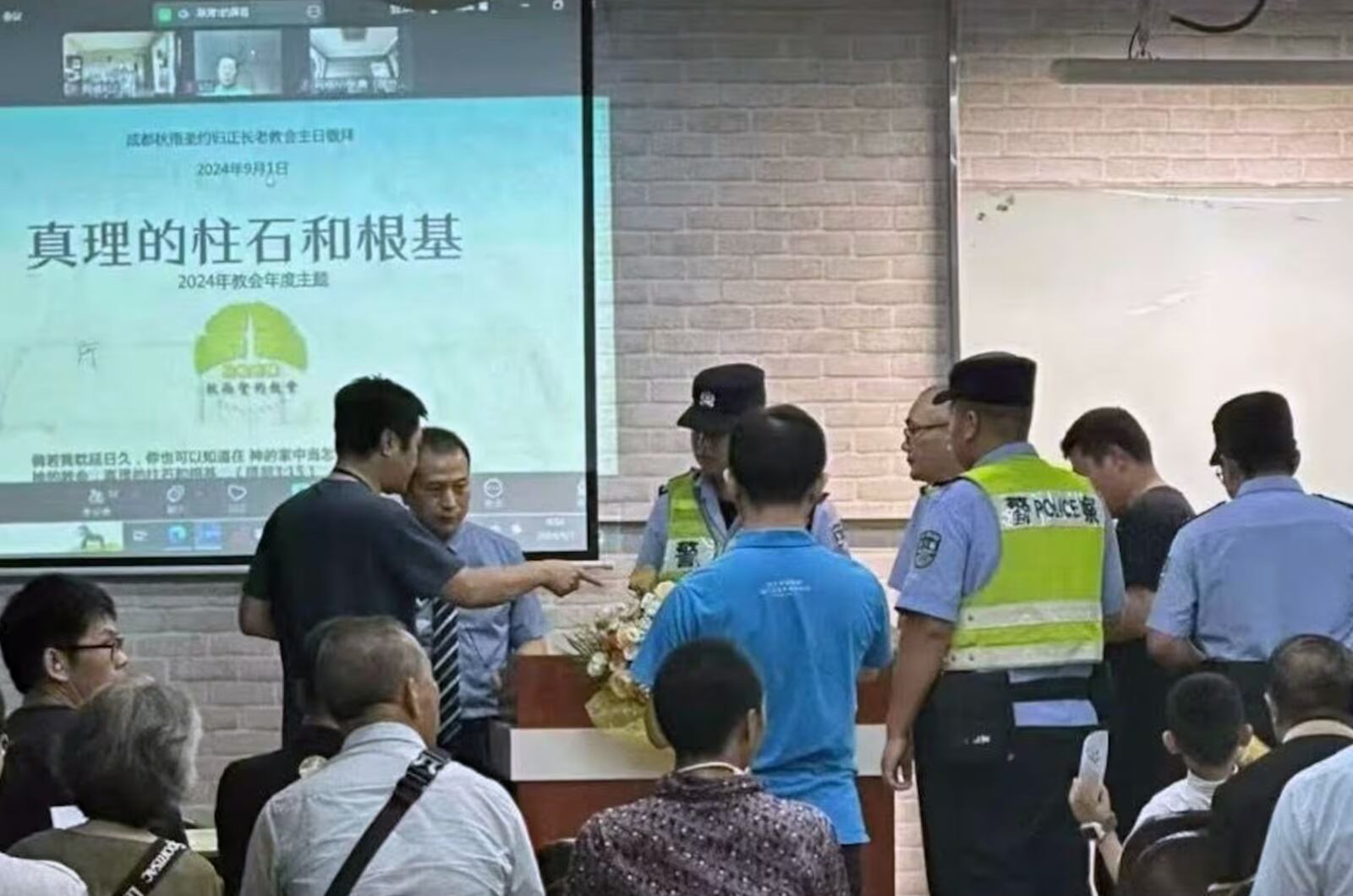
Law enforcement officers enter a house church gathering to conduct an inspection. In recent years, some house churches have faced administrative enforcement for operating without official registration.
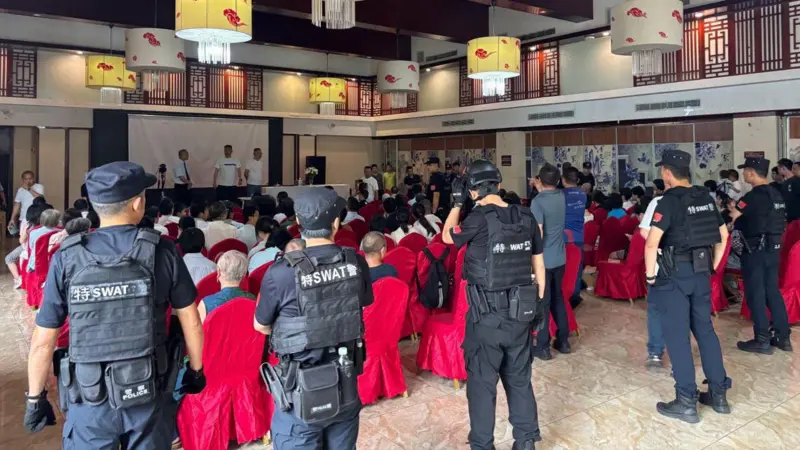
Law enforcement officers appear at a Christian gathering, interrupting the meeting.
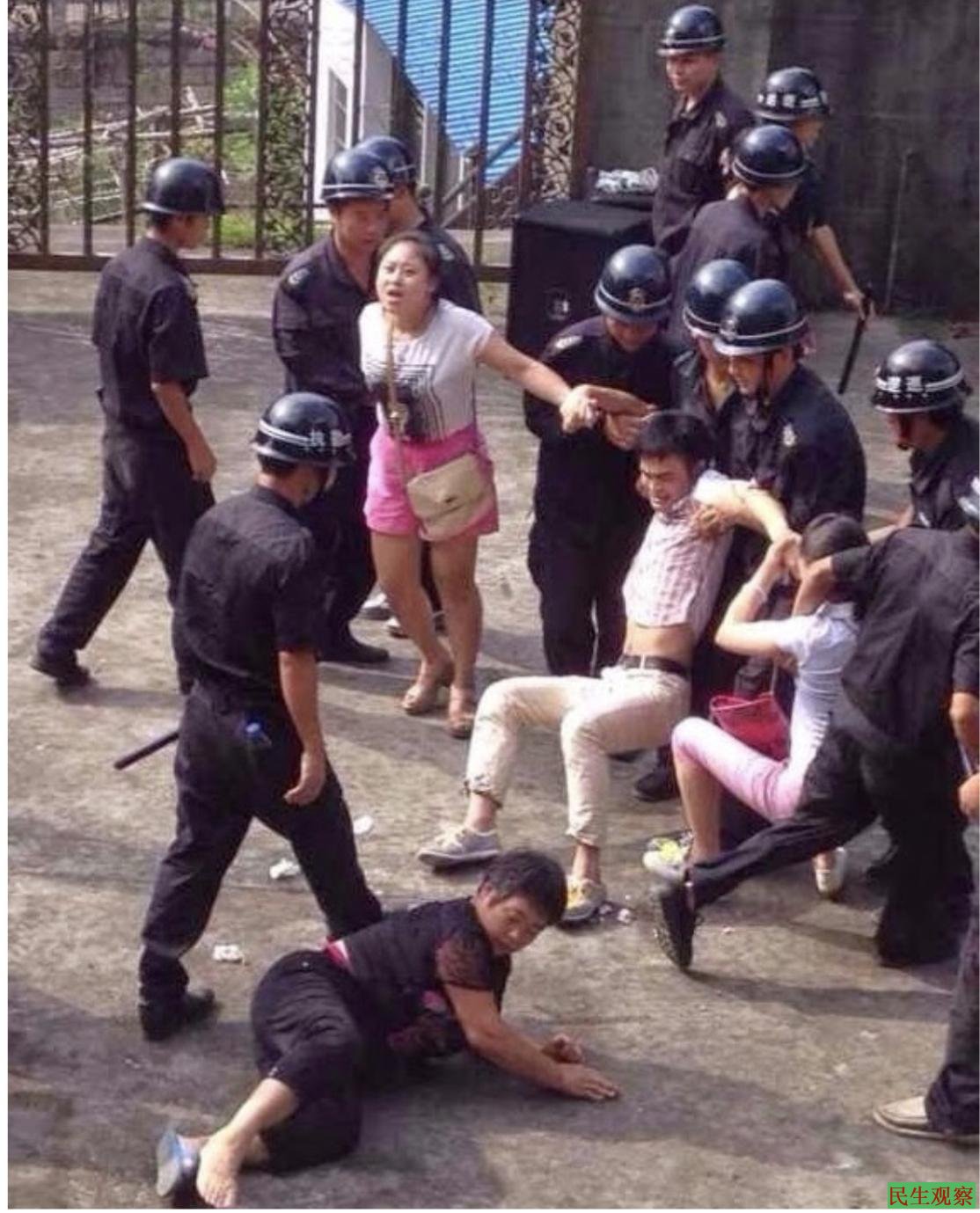
Church participants being escorted away from the scene during a law enforcement operation.
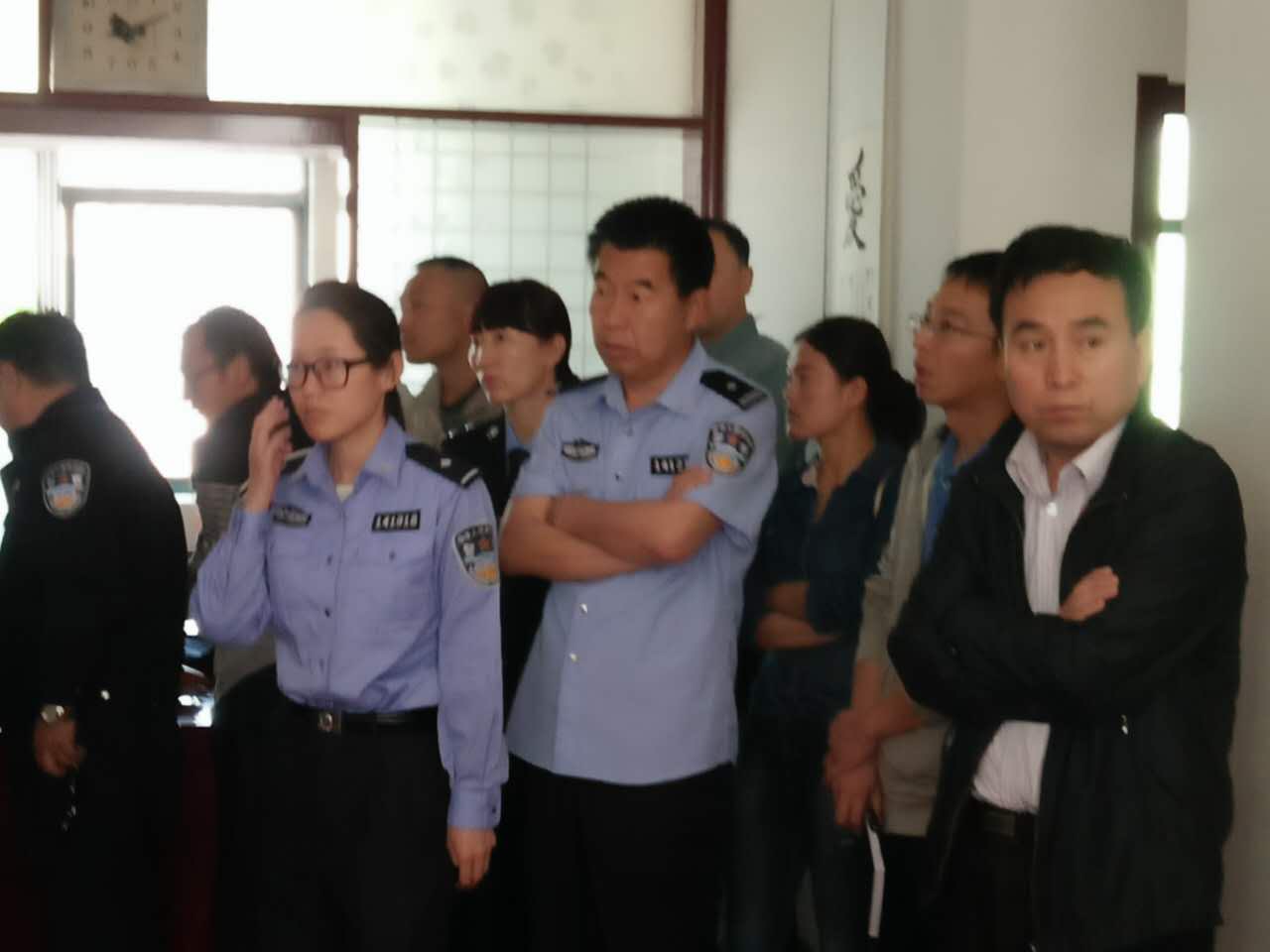
Law enforcement officers conducting an on-site inspection at a gathering place.
VIII. The Identity and Mission of China’s House Churches Today
Today, China’s house churches have developed into an extraordinarily diverse Christian community.
Their center of gravity has gradually shifted from rural areas to the cities, although the vast network of rural churches continues to exercise a profound influence.
Despite differences in theology and forms of church governance, house churches generally share several common characteristics:
- They do not join the Three-Self Patriotic Movement;
- They maintain the independence of the church from state administrative control;
- They are not controlled by foreign denominations;
- They desire spiritual fellowship with the global Church;
- They pursue godliness, prayer, and the mission of the gospel;
- They remain committed to Christ’s call to “take up the cross” and follow Him.
---
IX. Why Do They Still Call Themselves “House Churches”?
The term “house church” has often been the subject of both political and theological debate.
However, a growing number of Chinese house church pastors and theological writers believe that the term has long transcended the legal definition of an “unregistered church.” Instead, it has become a spiritual identity rooted in historical continuity.
First, many Chinese pastors of unregistered churches willingly identify themselves as belonging to the “house church” tradition. Using this term therefore respects the way these Christian communities understand and describe their own identity.
Second, the house church represents more than simply a particular form or location of Christian gathering. It embodies a historical tradition that can be traced back to the indigenous Chinese church revival movements of the early twentieth century.
It symbolizes the shared witness of Chinese Christians who have sought to preserve the independence of the church, faithfulness to Scripture, wholehearted devotion to Christ, and willingness to bear the cross.
For this reason, the term “house church” is more than a legal designation. It represents a spiritual heritage—and a continuing chapter in the history of the Church in China.